Resources
No matching articles.
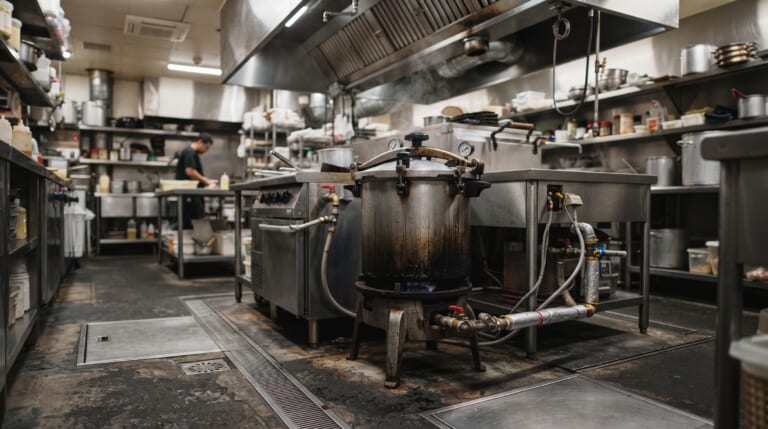
A pre-installation checklist for commercial pressure cookers: the five key points to confirm — kitchen layout, dimensions, gas heat output, ventilation and delivery route.
Read more →
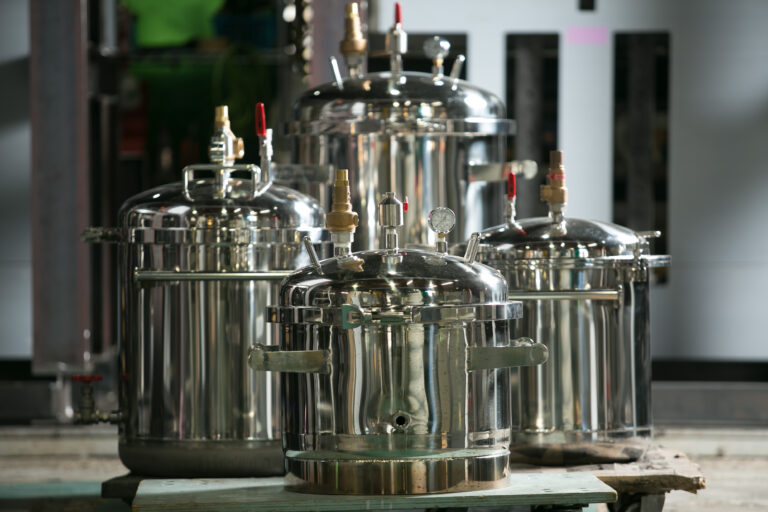
How to choose a commercial pressure cooker for ramen broth: how it differs from a regular stockpot and how to pick among four sizes (50/90/110/130L) by shop size and daily batch volume.
Read more →
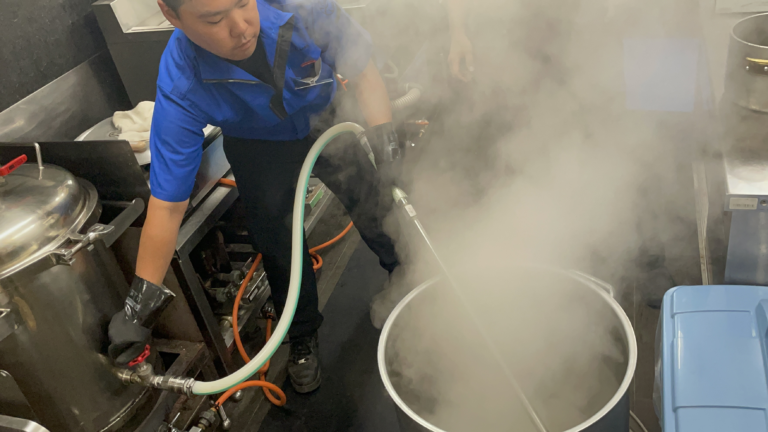
“High-pressure pots are dangerous” is a misconception. Meiwa Seisakusho’s commercial pressure stockpot manages pressure with dual safety valves, a pressure gauge and a pressure-release mechanism. Prep follows five steps set by numbers, making it easier for inexperienced staff to get close to the same taste. This article explains the safety devices, the procedure and the effect on costs such as gas.
Read more →
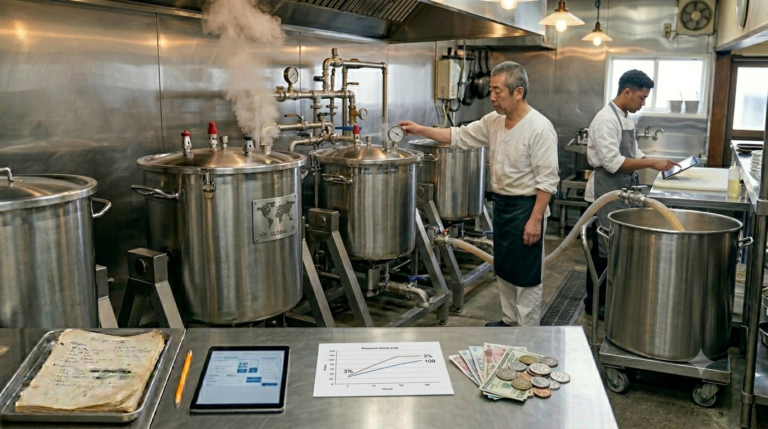
Beat Rising Pork & Chicken Bone Costs: Extract Every Last Drop of Umami and Cut Your Food Cost by 3%
Beat rising pork and chicken bone prices. A pressure stockpot cooks at about 120°C, softening bones until they break by hand and drawing flavor from the core. Meiwa Seisakusho explains how it works, with a worked example of lowering food cost by 3 points (¥90,000 a month).
Read more →
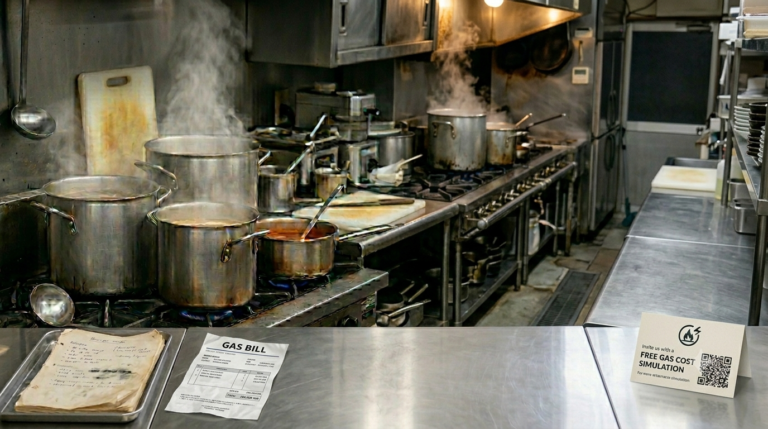
To the ramen owner sighing over the gas bill: how to cut the gas cost of making broth. A pressure stockpot cooks at about 120°C, so simmering that normally takes 8–12 hours finishes in about 2–2.5 hours. It holds pressure on low heat, and one shop using the 90L model cut its gas bill from ¥150,000 to ¥70,000 a month.
Read more →
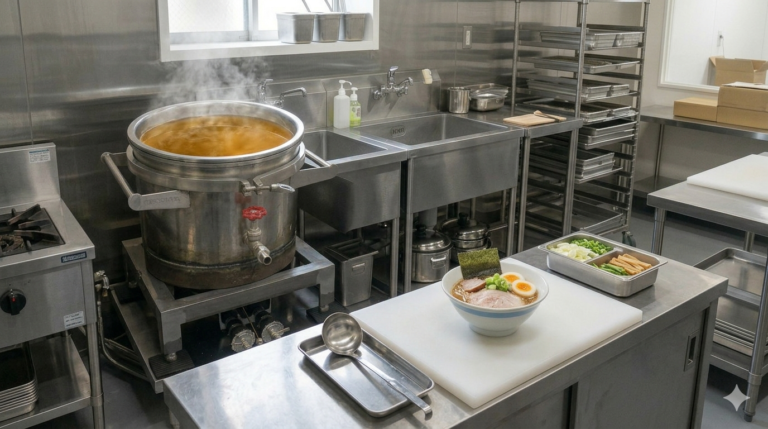
How to reduce “flavor variation,” the wall that ramen shops hit when opening more stores or building a chain. Meiwa Seisakusho’s commercial pressure stockpot follows five steps with set amounts of bones and water, pressurization time and heat, so the flagship’s method can be written down as a numerical recipe and handed to other shops. It also suits batch cooking in a central kitchen.
Read more →
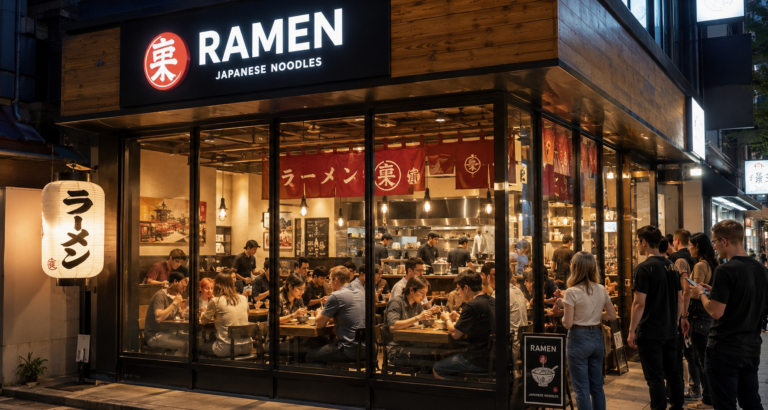
What to check about pressurized kitchen equipment before opening a Japanese ramen shop overseas (e.g., the U.S.). Meiwa Seisakusho can manufacture commercial pressure stockpots to ASME BPVC Section VIII, Division 1, used in North America and elsewhere, and cooperates on the inspections and documents needed to obtain the U-stamp.
Read more →
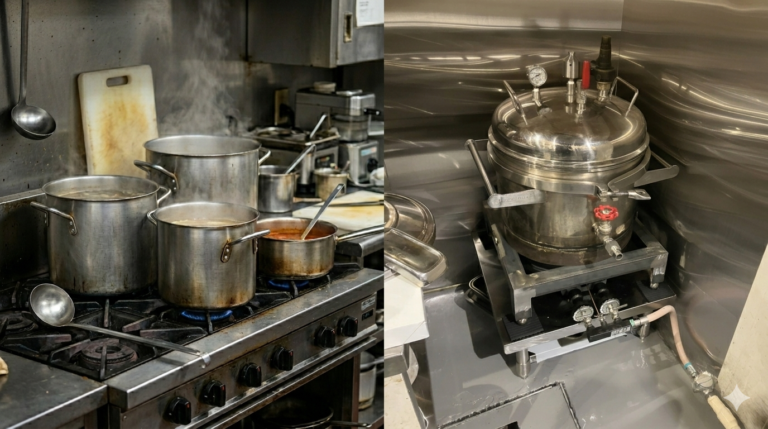
How to free your staff from the daily grind of broth prep. Meiwa Seisakusho’s commercial pressure stockpot shortens simmering that normally takes about 8–12 hours to about 2–2.5 hours, and removes the need to stand stirring or to lift heavy pots. Here is why it reduces early starts, overtime and washing-up, and eases staff shortages.
Read more →
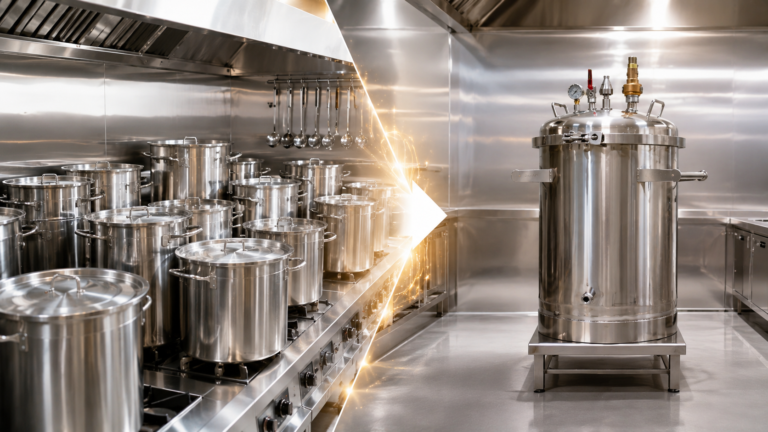
How to save kitchen space by consolidating several ordinary stockpots into one large 110L or 130L pressure stockpot. With the 130L model, three or four stockpots become one, making it easier to hold down the cost of burners, large exhaust hoods and kitchen floor space. Also covers what to check about the floor, licensing and inspections.
Read more →
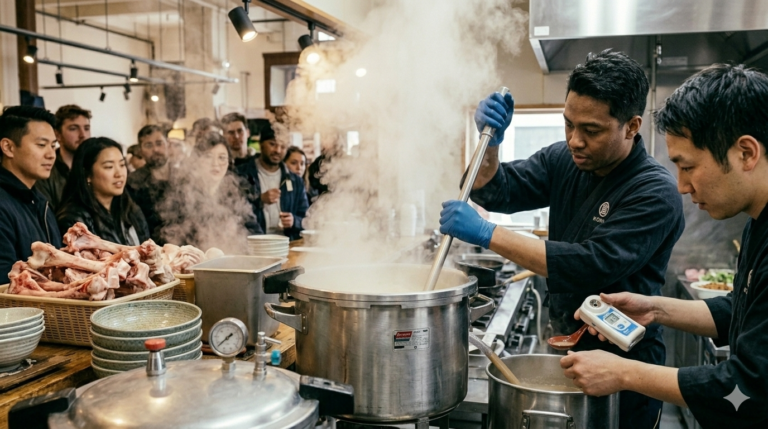
A guide to the ASME Code (BPVC Section VIII, Division 1) for pressure stockpots when taking ramen overseas: the quality documents required, how the U-stamp is obtained, what Meiwa Seisakusho can provide, and how numeric prep procedures and Brix checks help local staff make the same broth.
Read more →
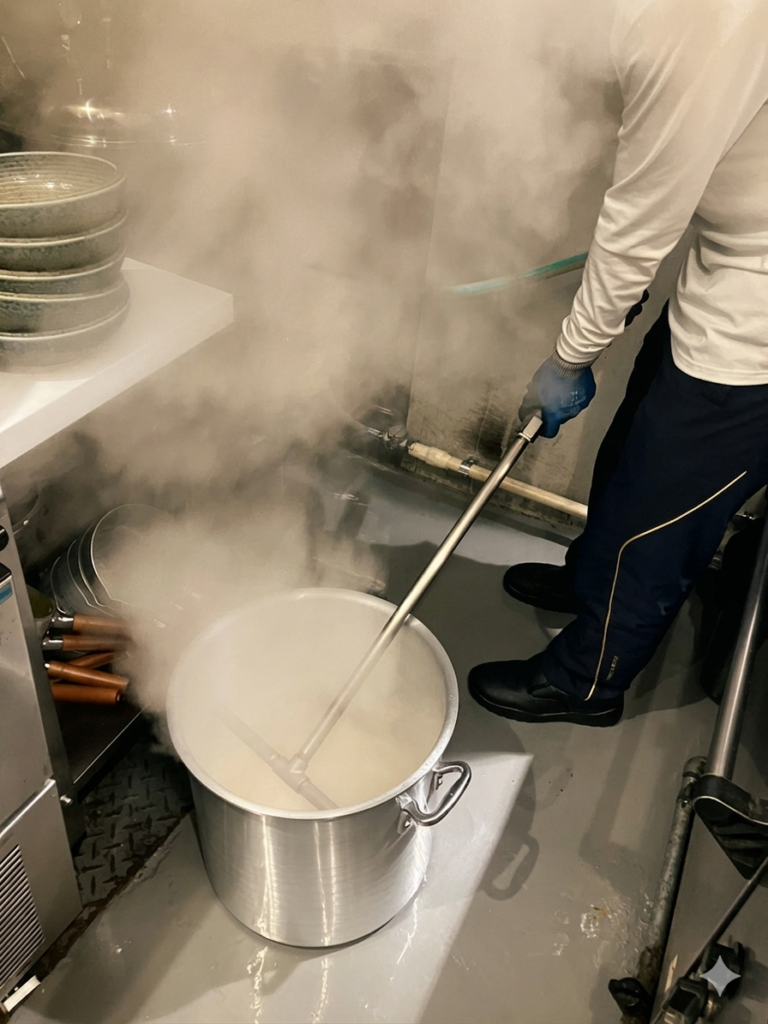
The first step of “kitchen DX” for a ramen shop is turning broth prep into a procedure set in numbers. Learn how Meiwa Seisakusho’s commercial pressure stockpot shortens an 8–12 hour simmer to about 2–2.5 hours, holds down gas costs by keeping low heat after pressurizing, and keeps flavor consistent through Brix checks.
Read more →
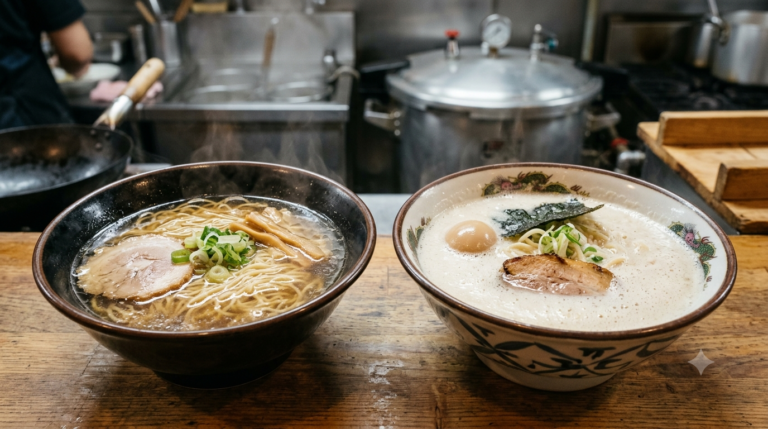
The difference between chintan (clear) and paitan (rich) broth lies in emulsification: whether the fat mixes with the water. Meiwa Seisakusho’s commercial pressure stockpot can draw off broth either as a clear chintan or as an emulsified paitan by adjusting how the valve is opened and how pressure is released. Learn the key points for making both in one unit.
Read more →
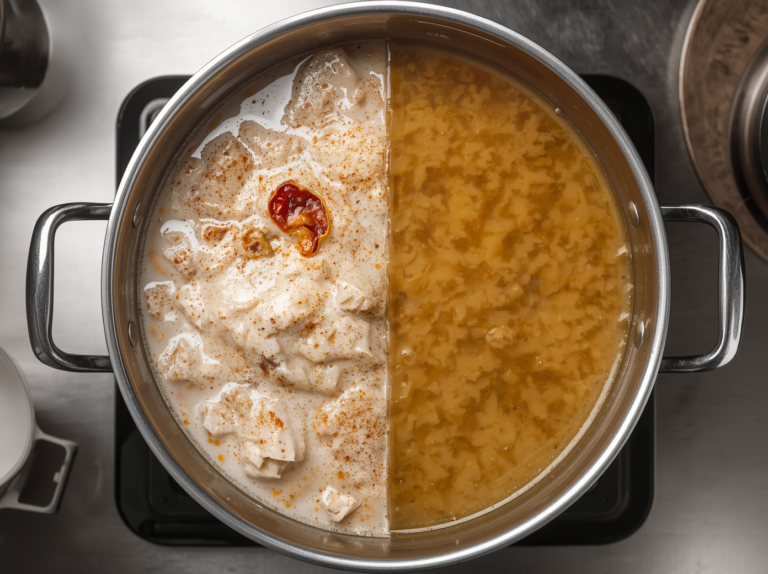
How to lighten tonkotsu broth prep with a commercial pressure stockpot. Cooking at about 120°C cuts a simmer that usually takes 8–12 hours to about 2–2.5 hours, and whole pork leg bones can go in uncut. Also covers how to make anything from light to rich tonkotsu by adjusting the bone mix, pressurizing time and how the broth is drawn off.
Read more →
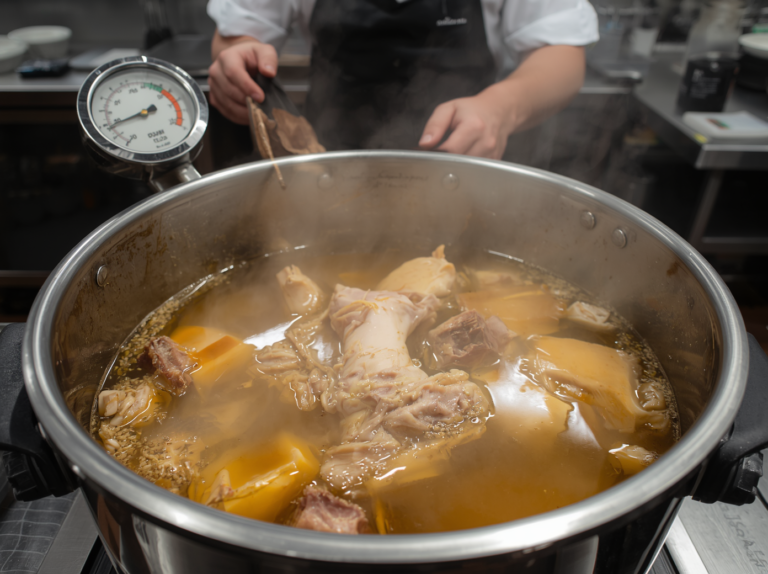
Why a pressure stockpot can cook broth at about 120°C, and how 120°C makes umami and body easier to draw out. In general, the higher the temperature, the faster bones soften and collagen turns into gelatin. Also covers how emulsification works and how sealed cooking keeps scum from mixing into the broth.
Read more →
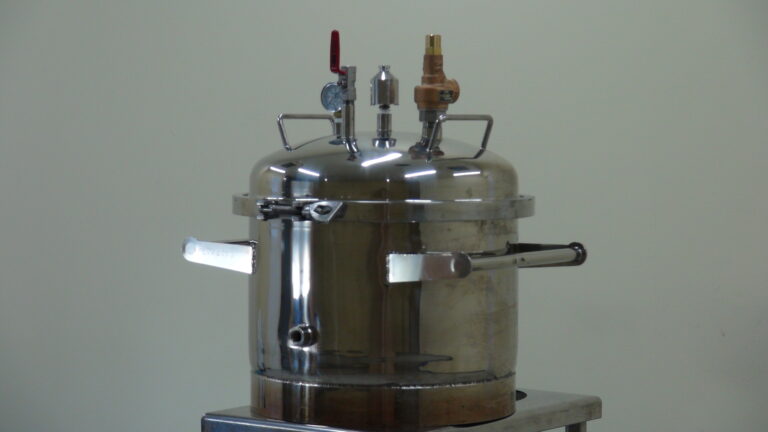
Kitchen work style reform for a ramen shop starts with making broth prep shorter, lighter and done within set hours. Learn how Meiwa Seisakusho’s commercial pressure stockpot cuts an 8–12 hour simmer to about 2–2.5 hours, removes constant stirring and the lifting of heavy pots, and lets you rebuild your prep schedule.
Read more →